


For Members
Member Spotlights
Meet the professionals committed to advancing anesthesiology in Kentucky and ensuring patient safety.

Aibek Mirrakhimov, MD, FCCP
1. What is your name, professional role, and current practice location?
My name is Aibek Mirrakhimov, MD, FCCP. I am an Assistant Professor of Anesthesiology, Perioperative, Critical Care, and Pain Medicine in the Division of Adult Cardiothoracic Anesthesiology at the University of Kentucky in Lexington. I also direct several educational initiatives involving perioperative TEE and POCUS.
2. What inspired you to pursue anesthesiology?
I initially trained in internal medicine and critical care medicine. I was drawn to anesthesiology because it combines physiology, pharmacology, procedural skills, critical care, and rapid clinical decision making. It also provides the opportunity to make an immediate and meaningful difference for patients during some of their most vulnerable moments.
3. What do you enjoy most about your clinical practice?
I most enjoy caring for medically complex patients, particularly those undergoing cardiac and other high-risk procedures. I appreciate the combination of advanced hemodynamic management, perioperative echocardiography, teamwork, and real time problem solving. I also enjoy teaching residents and fellows and watching them become increasingly confident and independent.
4. What is one challenging aspect of your work, and what potential solution do you envision?
One challenge is maintaining consistent communication and continuity of care across busy perioperative environments. Standardized handoff pathways, clearly defined escalation processes, and shared expectations among anesthesiology, surgery, nursing, and critical care teams can reduce variability and improve both patient safety and clinician efficiency.
5. Is there a clinical, educational, advocacy, or research project you are especially proud of?
I am particularly proud of developing structured perioperative TEE and POCUS education for residents and fellows. I am also proud of my broader medical education work, which bridges internal medicine and anesthesiology to strengthen perioperative decision making and improve the overall care experience for our patients.
6. What professional advice would you give to trainees or early career anesthesiologists?
Build a strong foundation in physiology and develop the habit of understanding why something is happening rather than simply memorizing what to do. Seek meaningful mentorship, remain open to constructive feedback, and volunteer for challenging cases. Most importantly, remain dependable, communicate clearly, and treat every clinical encounter as an opportunity to learn.
7. Tell us briefly about your life outside of anesthesiology.
Outside of clinical practice, I enjoy spending time with my family, watching good movies, and reading. I am particularly interested in history, fiction and literature, and accessible science books written for general audiences, especially those exploring astronomy and physics.
8. What is your favorite book, movie, or television series?
I am a movie aficionado and have many favorites. Some of my all-time favorites include Interstellar, Shutter Island, and Stanley Kubrick’s The Shining. Among television series, I am a longtime fan of The X-Files and HBO’s Chernobyl. My favorite works of fiction are The Twelve Chairs (https://www.amazon.com/Twelve-Chairs-Novel-Northwestern-Classics/dp/0810127725/) and The Golden Calf (https://www.amazon.com/Golden-Calf-Ilya-Ilf/dp/1934824070), both by Ilf and Petrov.
9. Is there anything else you would like KSA members to know about you?
My professional path from internal medicine and critical care medicine to anesthesiology has strongly influenced my approach to perioperative care. I believe anesthesiologists are uniquely positioned to integrate medical knowledge, procedural expertise, advanced imaging, and crisis management throughout the perioperative journey. I have a particular interest in echocardiography, point-of-care ultrasound, and bedside assessment of acute physiology, especially right ventricular physiology and failure.

Rebecca Myers, MD
1. What is your name, professional role, and current practice location?
My name is Rebecca Myers, and I am currently a pediatric anesthesiology fellow at the University of Kentucky. I completed my undergraduate education, medical school, residency, and fellowship training at UK. I also worked there as an anesthesiologist for eight years before returning to pursue pediatric anesthesiology fellowship training.
2. What inspired you to pursue anesthesiology?
I entered medical school intending to pursue general pediatrics. Early in my second year, I shadowed one of the pediatric surgeons to become more familiar with the operating room. During that very first case, I fell in love with pediatric anesthesiology.
I was fascinated by the way so many areas of medicine came together in one specialty, combined with my favorite patient population. I was intrigued by the anesthesiologist’s use of psychology to reduce perioperative anxiety; physiology to understand how something as simple as room temperature could affect a patient’s cardiovascular system; anatomy and procedural skills to place peripheral IVs, intubate patients, and perform a caudal block; and pharmacology to guide medication administration.
From that case forward, I was hooked.
3. What do you enjoy most about your clinical practice?
Although the opportunity to apply medical knowledge is what initially drew me to anesthesiology, patient interaction is what gives me the greatest passion for the work.
Prior to medical school I worked at a pediatrician's office. I remember once hearing an ill child, although feeling terrible, confidently say that their pediatrician would make them better. I valued the trust that patients place in their physicians. Whether caring for adults or children, I enjoy meeting patients where they are and bringing them comfort during one of the most stressful experiences of their lives.
This became even more meaningful to me in 2024, when my then-four-month-old child underwent open-heart surgery. Time stood still, and every word—and even the tone in which it was spoken—mattered to my husband and me. I had loved outpatient pediatrics for years, so much so that I had already been strongly considering a pediatric anesthesiology fellowship, but after that experience, I could no longer deny my desire to pursue a career in pediatrics. I knew I wanted to be able to support families on their hardest days and to care for medically complex children like my own for the rest of my life. I also wanted to deepen my knowledge base and skillset to become even more confident in outpatient pediatric anesthesia cases.
4. What is one challenging aspect of your work, and what potential solution do you envision?
One particularly challenging aspect of my work is that, despite everyone’s best efforts, patients do not always have the outcomes we hope for. This may be something relatively minor, such as needing multiple attempts to place a peripheral IV, or something devastating, such as losing a patient I have cared for repeatedly to cancer.
I struggle to leave those disappointments and tragedies at work. I think most physicians care deeply about their patients and want the very best outcomes for them. I am no exception, and my heart breaks with families on their hardest days.
I am not sure this is a problem that requires a solution. The depth of caring is what led me to medicine, anesthesiology, and ultimately pediatrics. That sensitivity may make the work more difficult at times, but it also means that the victories are celebrated more deeply and help provide balance.
5. Is there a clinical, educational, advocacy, or research project of which you are especially proud?
I am especially proud of a book chapter that I co-authored with the mentorship of Dr. Regina Fragneto.
Before deciding to pursue pediatric anesthesiology, I spent much of my clinical time in obstetric anesthesiology. I wrote a chapter for a problem-based learning textbook on cystic fibrosis and pregnancy. Although the chapter has been accepted for publication, it has not yet been published.
While publication itself is exciting, I am most proud of the work that went into the project. I had previously presented at conferences and written abstracts and a book review, but I had never undertaken a book chapter. I reviewed an extensive number of journal articles and textbooks to provide evidence-based recommendations for the obstetric anesthetic management of patients with cystic fibrosis. I am very proud of the chapter Dr. Fragneto and I wrote.
6. What professional advice would you give to trainees or early-career anesthesiologists?
Immerse yourself in something you are passionate about, and your job will never feel like work. Keep your “why” close to your heart.
When you become frustrated with your schedule or with rules that do not seem to make sense, look at your patient and remember that they are placing their trust in you. That is both a tremendous responsibility and an honor. Hopefully, taking pride in the care you provide will help carry you through the most difficult days.
Also, rely on your colleagues. I am blessed with wonderful friends and coworkers. Having people who can serve as a sounding board provides peace, perspective, and balance.
7. Tell us briefly about your life outside of anesthesiology.
I married my high school sweetheart in 2009. He is incredibly supportive and has encouraged me to pursue my dreams, even when that meant becoming a stay-at-home dad or adjusting to significant changes in our income. He is very talented, and I love cheering him on at his men’s league hockey games and at local concerts when he plays the saxophone.
We have three beautiful children, ages 12, 8, and 2. We enjoy traveling, especially to Disney World and Disneyland, as well as going on family runs, bike rides, and hikes; making s’mores around campfires; and attending drive-in movies. I treasure my family. We are blessed to learn through our children about autism and Down syndrome which inspires me and gives me a unique perspective when caring for patients at work.
I am from Richmond, Kentucky, and I feel very fortunate that my parents and siblings live nearby. Most Sundays after church, my parents, siblings, nieces, and immediate family go out to lunch together. It is usually a little loud and chaotic, but I love catching up with everyone each week.
8. What are your favorite hobbies or ways to unwind?
My favorite way to spend a day off work is with my family. They bring me immense joy.
Outside of family time, I love reading, especially classic and historical fiction. At my son's 6th grade orientation recently, I heard a teacher jokingly ask a student whether she liked textbooks. As expected, the student answered, “No.” I told my husband and son that I would have thwarted the teacher’s joke as a sixth grader because I would have immediately answered, “Yes!”
I developed a love of reading during early childhood. Although time limits my ability to read purely for enjoyment most days, fortunately, I still enjoy reading textbooks as well.
9. What is your favorite book, movie, or television series?
My favorite book is probably Pride and Prejudice. I admire Elizabeth Bennet because she is independent, intelligent, and deeply devoted to her family.
I enjoy watching the characters evolve as they learn to recognize their own flaws and appreciate qualities they had previously undervalued- or even viewed negatively—in others. I also love a book with a happy ending.
10. Is there anything else you would like KSA members to know about you?
I would like to thank everyone who has invested time and energy in my education throughout medical school, residency, and now fellowship. I am also deeply grateful to my department’s leadership for supporting me as I pursue additional training and education. Lastly, but most importantly, I thank God for guiding me down this path and walking beside me every step of the way.

Mission
The Kentucky Society of Anesthesiologists (KSA) is a professional organization of Anesthesiologists in the State of Kentucky.
The purpose of the Society is to associate and affiliate into one organization all of the reputable doctors of medicine the State of Kentucky, who are engaged in the practice of, or are otherwise interested in the medical specialty of anesthesiology.
To encourage specialization in this field and in other ways to make available to more people the benefits to be derived from the services of qualified anesthesiologists.
To raise the standards of the specialty by fostering and encouraging research and scientific progress in anesthesiology; to disseminate information in regard to anesthesiology.
To protect the public against irresponsible and unqualified practitioners of anesthesiology.
To promote editing and publishing in the field of anesthesiology and related fields.
To safeguard the professional interests of its members, and in all ways to develop and further the specialty of anesthesiology for the general elevation of the standards of medical practice.

Membership
The Kentucky Society of Anesthesiologists, Limited (KSA) is a professional organization of Anesthesiologists in the State of Kentucky.
The members of this Society shall conform to the classification as described in the Constitution and Bylaws of the American Society of Anesthesiologists. Membership in this Society shall be considered a privilege and not a right.
Application for membership can be made through the American Society of Anesthesiologists website at www.asahq.org. Dues are billed through the ASA for both the ASA and KSA.

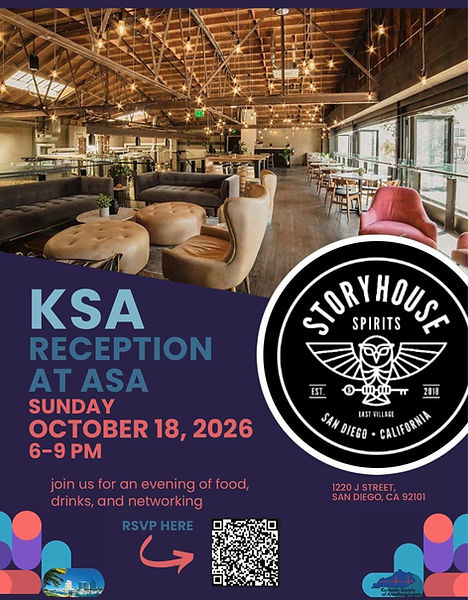
Upcoming Meetings & Events


Anesthesiology Resources
SOAP Peripartum Pain Management
Frailty Tool Kit and Assessment for Anesthesiologists (August 2021) https://www.asahq.org/about-asa/governance-and-committees/asa-committees/committee-on-geriatric-anesthesia/frailty-tool-kit
https://www.sciencedirect.com/science/article/pii/S1550728924007949
Highlighted ASA Committee Work Products
Recommendations on preprocedural fasting in hospitalized patients who receive tube feeding (PDF)
Epidural Blood Patch Clinical Management